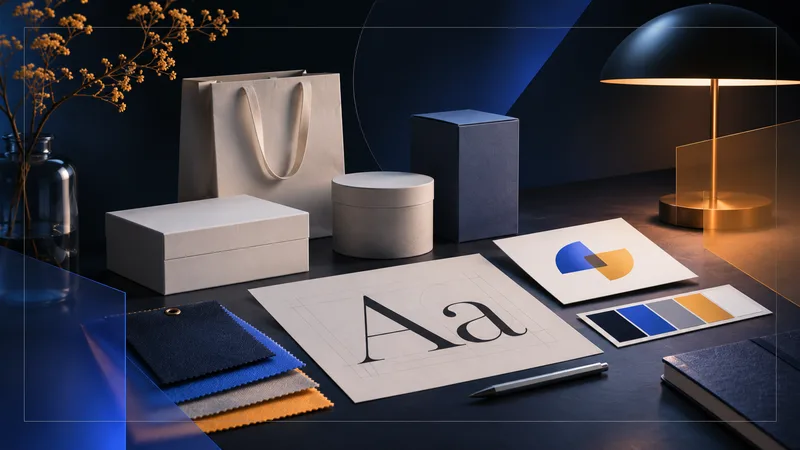
Many owners start a business, hire a designer and say they need branding. What they usually mean is that they need a logo. The two words are used as if they mean the same thing, and the confusion leads to wasted money on both sides. Some businesses pay for a full identity system they are not ready to use. Others settle for a logo alone and then wonder why their website, social posts and brochures look like they belong to different companies.
This guide explains the difference between a logo, a brand identity and a brand in plain language. It shows what each includes, when a simple logo is enough, when you should invest in a full identity and how to brief a designer so that you get what you actually need.
Brand, brand identity and logo: three different things
These three terms sit inside each other like nesting dolls, and it helps to define each one clearly.
Brand
A brand is the perception people have of your business. It lives in customers' minds and is shaped by everything they experience: your product quality, your prices, how you answer the phone, how fast you deliver, what people say about you and how you look. You cannot design a brand directly. You can only influence it through your choices and your behaviour.
Brand identity
Brand identity is the set of visible and verbal elements you control to express your brand. It includes your logo, colours, typography, imagery style, graphic elements, tone of voice and the rules for using them. Identity is the toolkit that makes your business recognisable and consistent wherever it appears.
Logo
A logo is a single mark, usually a symbol, a wordmark or both, that identifies your business. It is the most visible part of the identity, but it is only one part. A logo on its own does not tell you which colours to use on a poster, which typeface to use on a website or how to write an email.

What a brand identity system includes
A full identity system turns a logo into a working visual language. The exact contents vary, but most professional identities contain the following.
- Logo suite: primary logo, secondary versions, icon or monogram, and versions for light and dark backgrounds
- Colour palette: primary, secondary and neutral colours with exact values for screen and print
- Typography: chosen typefaces, sizes, weights and hierarchy rules
- Imagery and illustration style: how photography, icons and graphics should look
- Graphic elements: patterns, shapes, lines and layout principles
- Tone of voice: how the brand sounds in writing, with examples
- Application examples: website, social media, stationery, packaging, signage or presentations
- Brand guidelines: a document that explains how to use all of the above, with do and don't examples
Strong guidelines matter because they let other people, such as new employees, freelancers and printers, apply the brand correctly without calling the designer each time.
Logo only vs full brand identity
The comparison below shows how the two approaches differ in scope and in what they let you do. Neither is wrong. The right choice depends on your stage and your needs.
A logo-only project is faster and cheaper, and gives you a mark to put on everything. A full identity takes more time and budget, but it saves you effort later, because decisions about colours, type, imagery and tone are already made.

When a logo on its own is enough
A good logo project is the right call in several situations.
- You are testing an idea. If you are validating a business and may change direction, do not over-invest in identity yet.
- You have a small, local or personal business that relies on word of mouth and a few touchpoints.
- Your budget is limited. A thoughtful logo with a simple palette and font choice beats a rushed full identity.
- You only need a mark for a profile picture, a sign or a small number of items.
Even in these cases, make sure the logo comes with at least a basic palette and typeface recommendation, and in the correct file formats, so that you can use it consistently.
When you need a full brand identity
A broader identity is worth the investment when the brand will appear in many places, or when consistency and trust drive revenue.
- You are launching a business with ambitious growth plans and expect to appear on a website, social media, packaging, advertising and presentations.
- You sell in a crowded market where differentiation and perceived quality influence buying decisions.
- You charge premium prices. Premium buyers expect a coherent, polished experience, and inconsistency raises doubts.
- You have a team or agencies who produce materials, and you need rules so that everyone stays consistent.
- You are rebranding because the business has changed, merged or outgrown its original look.
- You sell products that need packaging, labels and a recognisable shelf or screen presence.
If several of these apply, treat the identity as infrastructure for marketing, not a luxury.
Why identity affects results
It is tempting to see design as decoration, but identity influences measurable outcomes. Consistent presentation across channels builds familiarity, and familiar brands are easier to trust and remember. Clear typography and colour hierarchy make websites and ads easier to read, which can improve conversion. A defined tone of voice makes copy faster to write and more persuasive. A recognisable look helps people spot your content in a crowded feed.
Identity also reduces waste. Without guidelines, teams redesign the same templates repeatedly, debate colours in every project and produce inconsistent materials that must be corrected. With a system, designers and marketers move faster and stay on brand.
The effect compounds with your website. A site built on a coherent identity feels intentional, while one built on a bare logo often looks generic. If you are planning a site, read about what a website costs and consider whether the brand work should come first, so that the design is not built twice.
How a brand identity project works
A professional process is more than choosing pretty shapes. It starts with understanding the business and ends with tools your team can use.
- Discovery: workshops or questionnaires about your business, customers, competitors, values and ambitions.
- Positioning and strategy: defining what you stand for, who you serve and how you are different, which guides every creative decision.
- Creative exploration: moodboards, name and tagline checks if needed and early logo directions.
- Logo development: refining one direction into a logo suite, tested at small sizes and in black and white.
- System design: colour, typography, imagery and graphic elements built around the logo.
- Application: designing real examples, such as a website homepage, social templates and stationery, to prove the system works.
- Guidelines and handover: a document and a library of files in the right formats.
Good designers push back on vague briefs and ask hard questions. If a designer offers a logo in a day without asking about your business, expect a generic result.
From strategy to a usable brand
The flow below shows how a logo grows into a full identity system. Skipping the early steps is the most common reason logos feel arbitrary.

What it costs, and what affects the price
Prices vary widely by designer, region and scope. As a rough guide, a custom logo from an experienced freelancer or studio often starts in the low hundreds to a few thousand dollars. A full brand identity with strategy, a logo suite, guidelines and applications commonly ranges from several thousand to tens of thousands. Large corporate rebrands cost far more.
Price depends on research depth, the number of concepts and revisions, the size of the identity system, the number of applications and the experience of the team. Extremely cheap logos, such as those from template marketplaces, may reuse artwork, offer no exclusivity and provide limited file formats. Check who owns the final work, and whether the logo is original and can be trademarked.
Think about total value, not only price. A distinctive identity that you use for ten years costs very little per year compared with the benefit of consistent, recognisable marketing.
What you should receive
Whichever route you choose, insist on professional deliverables. At a minimum, a logo project should include vector files, such as SVG, AI or EPS, PNG and JPG versions, light and dark variants and a one-colour version. A full identity should add the colour palette with HEX, RGB and CMYK values, the font files or licence details, templates for key materials and a guidelines document.
Ask for the source files and for written confirmation that you own the copyright on final approved designs. Without these you may be unable to update the brand later.
Common mistakes
- Starting with the logo and stopping there. The logo then has to carry too much, and everything else is improvised.
- Copying competitors. A look that is too similar makes you forgettable and may create legal risk.
- Following trends blindly. Trendy styles age quickly. Aim for timeless clarity, with room for freshness.
- Designing by committee. Too many opinions create compromise. Appoint a decision maker, and judge work against strategy.
- Ignoring small sizes and real use. A logo must work as a favicon, on a phone and in one colour.
- Not documenting the rules. Without guidelines, consistency fades within months.
- Treating it as a one-time job. Brands evolve, so review the system when the business changes.
How to brief a designer well
A strong brief saves time and improves results. Prepare short answers to these questions.
- What does the business do, and for whom?
- What makes you different from the alternatives?
- Which three words should people use to describe the brand?
- Who are your main competitors, and what do you like and dislike about their branding?
- Where will the brand appear first: website, packaging, social media, print or signage?
- Are there colours or styles you must use, or must avoid?
- What is the budget and timeline?
- Who has final approval?
Share examples of brands you admire and explain why. This gives the designer a language for discussing taste.
Already have a logo? Refresh, extend or rebrand
You do not always need to start from scratch. If your logo is sound but inconsistent in use, you may only need to extend it into a system, with a palette, typography and guidelines. If it looks dated but the brand equity is strong, a refresh can modernise it while keeping recognition. A full rebrand is appropriate when the business model, audience or values have changed enough that the current identity is misleading.
Check your website and materials for signs of an identity problem, such as mismatched colours, several versions of the logo and different tones across channels. Our guide to signs your website needs a redesign shows how brand inconsistency often appears online first.
Bringing the brand to your marketing
Identity pays off only when it is applied. Use the same colours, type and tone on your website, landing pages, emails, social media and ads. Create templates for repeating items, such as social posts, presentations and proposals. Train your team on the guidelines, and review materials for consistency. A well-planned social media content strategy will lean on your identity to make posts recognisable at a glance, even before people read the name.
Rolling out a new identity without chaos
Launching a new identity is a project in itself. Make a list of every place the old brand appears: website, social profiles, email signatures, invoices, proposals, packaging, signage, uniforms and vehicles. Prioritise by visibility, and update the digital items first, since they are fast and cheap. Replace printed materials as you run out of them, rather than discarding stock.
Announce the change with a short story that explains why, and what stays the same. Update your website and profiles on the same day, so that customers see one coherent picture. Brief your team, give them templates and answer their questions. A calm, planned rollout makes the brand look confident, while a half-finished one makes it look unsure.
Examples: how the choice plays out
A freelance photographer who sells through referrals and an Instagram profile may only need a refined wordmark, a restrained palette and one or two typefaces. The cost is modest, the result is consistent enough and the business can grow into a fuller system later.
A food brand preparing to appear on shelves, on a website, on social media and in delivery apps faces a different situation. Packaging, photography, tone and digital presence all need to work together, and several partners will touch the brand. A full identity with guidelines saves money in the long run, because every future decision starts from a shared foundation.
A growing professional services firm sits between the two. A strong logo suite, a clear palette, typography and tone of voice, with a short set of guidelines and templates for the website and presentations, gives it most of the benefit without the cost of a large system.
Protecting what you create
Once you have an identity, protect it. Check that your name and logo are not confusingly similar to existing marks in your market before you invest, and consider registering a trademark for your core assets. Store master files in a shared, backed-up location, and keep a list of approved fonts, colours and templates.
Review the brand once a year. Look at how it appears across channels, retire outdated materials and update the guidelines where reality has moved on. A little regular care prevents the drift that makes brands look inconsistent after a few years.
Questions owners often ask designers
Owners often worry about details that a good designer can settle quickly. Can the logo work in one colour and at very small sizes? Does it look right on dark backgrounds? Can it be embroidered, engraved or printed on packaging? Does it feel different enough from competitors? Will the colours meet accessibility contrast needs on a website? Are the fonts licensed for commercial use, on the web and in print?
Raise these questions during the design stage, not after delivery. A professional will have tested the answers, and will show you the logo in real situations, on a website, on a phone and on printed items, before you approve it.
Key takeaways
- A logo is one element. A brand identity is the whole system that makes a business recognisable and consistent.
- A thoughtful logo with a basic palette and typefaces suits early-stage and small businesses.
- A full identity with guidelines suits growing, premium or multi-channel brands.
- Start from strategy, and insist on proper files, guidelines and ownership.
- Apply the identity consistently, and review it once a year.
How to decide
Ask yourself three questions. How many places will the brand appear in the next year? How important are trust and perceived quality to your sales? And who else will produce materials for you? If the answers are a few places, moderate importance and just you, a thoughtful logo with a basic palette and fonts may be right for now. If the answers are many places, high importance and a growing team, invest in a full identity system.
Whichever you choose, start from strategy rather than aesthetics. A brand that is clear about who it is for and why it exists will always produce better design than one that starts with a favourite colour. If you would like a straightforward recommendation for your situation, we are happy to talk it through.
Frequently asked questions
What is the difference between a logo and a brand identity?
A logo is a single mark. A brand identity is the whole system of logo, colours, typography, imagery, tone of voice and rules that make a business recognisable.
Do I need a full brand identity for a small business?
Not always. A thoughtful logo with a basic palette and typeface can be enough at the start. Invest in a full identity when the brand will appear in many places or compete on perceived quality.
What is included in brand guidelines?
Logo rules, colour values, typography, imagery style, tone of voice, layout principles and examples of correct and incorrect use.
How much does a logo cost compared with a brand identity?
A custom logo may cost from a few hundred to a few thousand dollars, while a full identity with strategy and guidelines typically costs several thousand to tens of thousands, depending on scope.
Can I design my own logo?
You can, and tools make it easy. The risks are generic results, limited file formats and trademark issues. For a business that depends on its reputation, a professional is usually worth it.
How long does a brand identity project take?
A logo can take a few weeks. A full identity usually takes six to twelve weeks, depending on research, feedback and the size of the system.
What file formats should I receive?
Vector files such as SVG, AI or EPS, plus PNG and JPG, in colour, one-colour and reversed versions, along with the guidelines and font details.
When should I rebrand?
When your business, audience or values have changed enough that the current identity misleads, or after a merger, expansion or repositioning.
Does branding help with SEO and marketing?
Indirectly. Strong, consistent branding improves recognition, trust and click-through, and it makes content and ads more effective.
Who owns the logo after the project?
You should. Confirm in the contract that copyright of the final approved work transfers to you, and ask for the source files.
Ready to put this into practice?
Tell us about your business and goals. We will reply with an honest recommendation, a clear scope and a price range, with no pressure to commit.